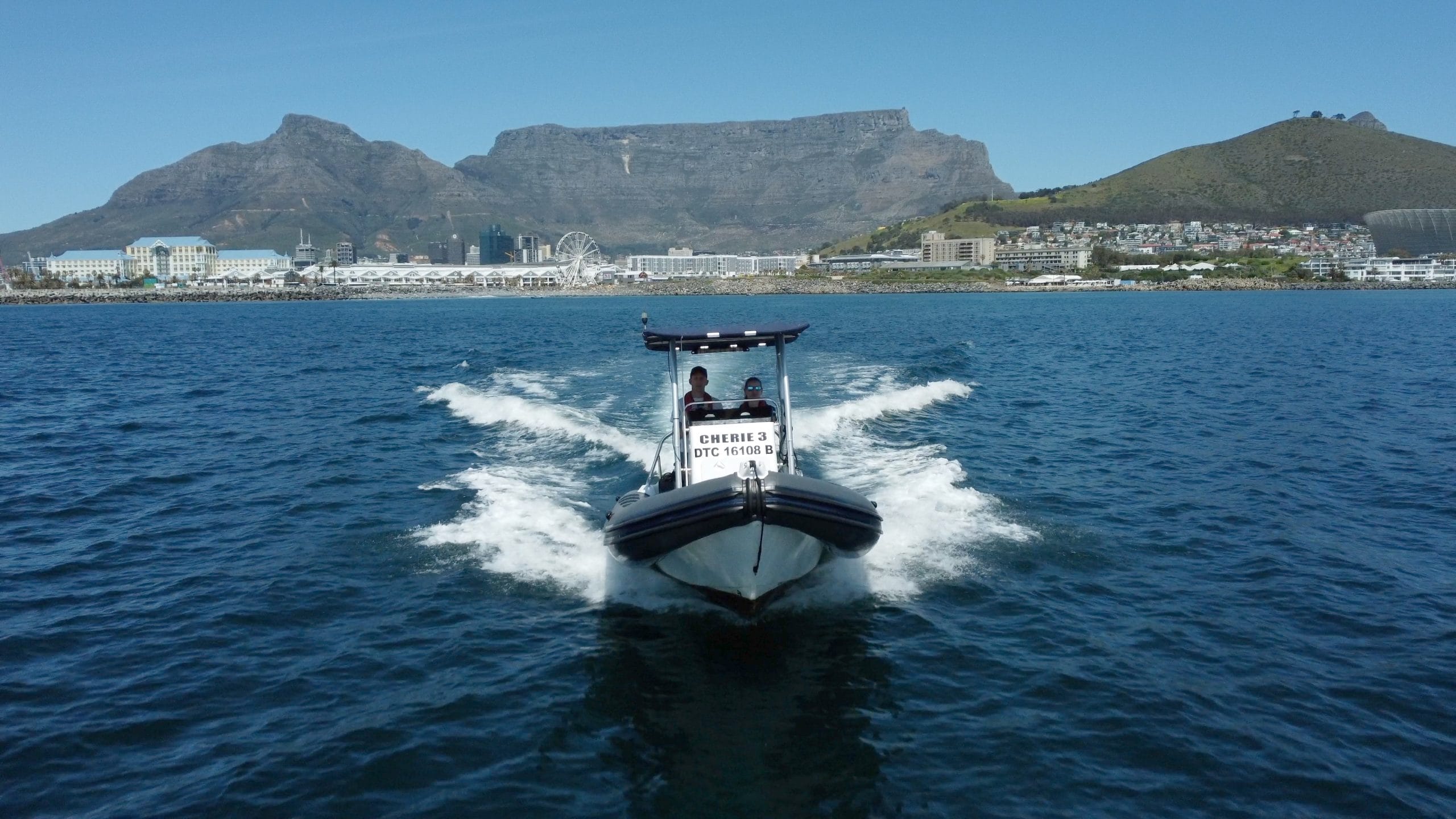
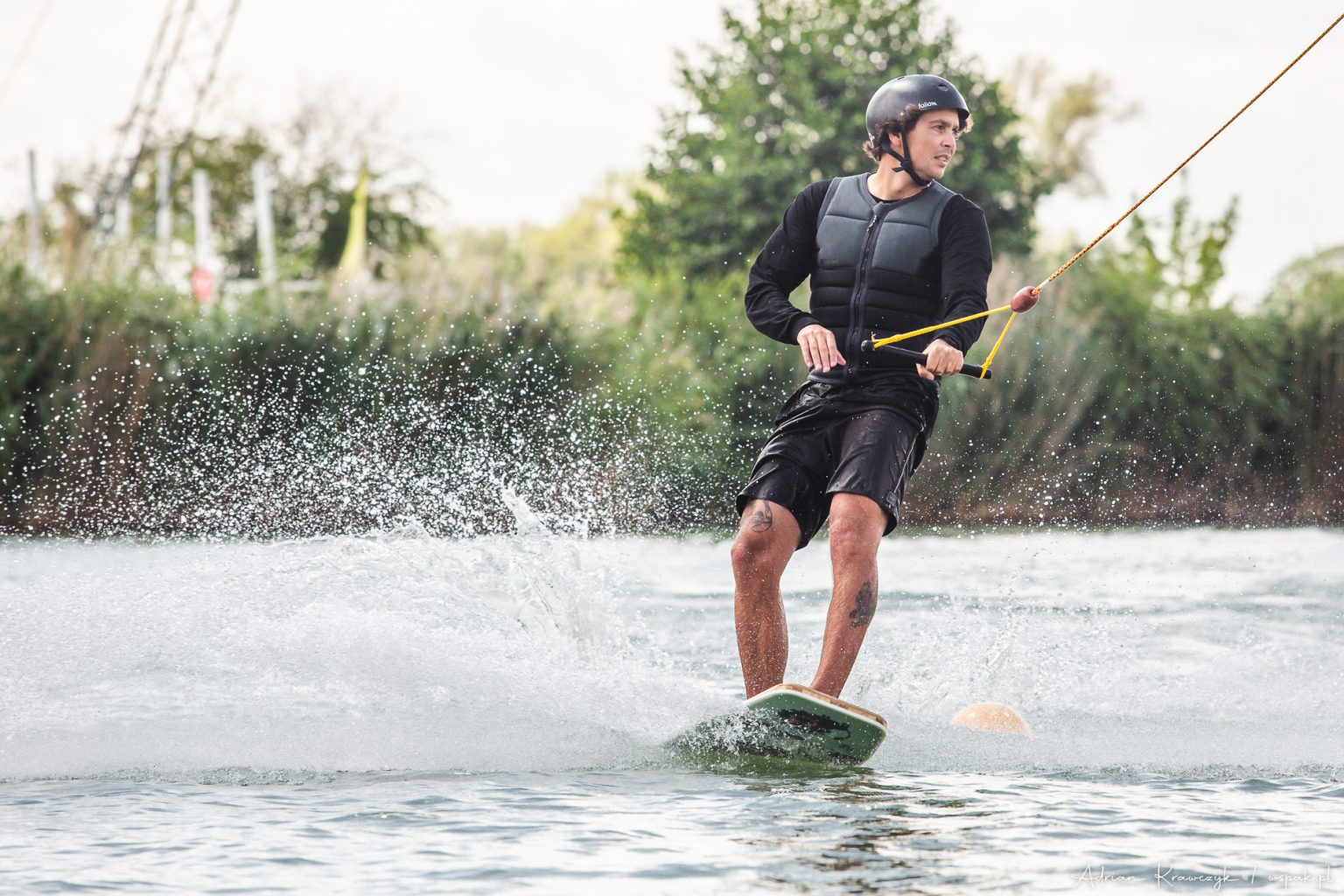
The quality of any training experience is shaped by the people leading it. At SYSA, students on the Superyacht Watersports Instructor course learn from someone who has spent much of his life competing, creating, experimenting, and developing his understanding of what happens behind the boat.
Matti Buys is SYSA’s Senior Instructor and a professional wakeskater whose career has included multiple South African national titles, a third-place finish at the IWWF World Championships, and involvement in high-profile projects such as Red Bull Reflections with Brian Grubb. Since joining SYSA in 2019, he has also gained extensive experience within the superyacht training environment, combining his competitive watersports background with practical boating knowledge and a clear understanding of the standards expected from crew working on board.
His journey into watersports did not begin with a carefully mapped-out career plan. It grew naturally from skateboarding, wakeboarding, a love of the water, and the determination to keep learning. Over time, competition and his experience within the yachting industry taught him how to analyse conditions, adapt under pressure, and hold himself to a high standard. These are lessons he now brings into his work with SYSA students.
We spoke to Matti about how he discovered wakeskating, what competing at an international level taught him, and how his experience as an athlete shapes the way he teaches today.
Your career in watersports started when you discovered wakeskating at around 14 years old. What was it about the sport that captured your attention, and when did you realise it could become more than something you simply did for fun?
I was really fortunate that wakeskating was a very natural progression from the sports I was already involved in. From skateboarding to wakeboarding, wakeskating just made sense as the next step.
I was always drawn to the water. However, growing up in Gauteng did not present us with as many opportunities as someone living on the coast might have had. Towed watersports were a great way to get onto the water and challenge ourselves.
I was also blessed with a big brother and a group of friends who were all doing it, and naturally, I had to be the annoying kid who followed.
You have competed at the highest level of wakeskating, including winning multiple South African national titles and placing third at the IWWF World Championships. What does competing at that level teach you about technique, discipline, and understanding what is happening behind the boat?
My theory would be that it takes a lot of intrinsic motivation to develop the discipline and drive required to compete at any level in the sport.
For the most part, we were self-coached and self-managed, and that meant everything from preparation to contest decisions was up to us. By default, we were forced to understand the nuances and strategies that came with competing.
From understanding conditions to adapting to different boats and wake parks, we were left to figure it all out on our own. As challenging as this was, I think it built really good analytical skills on the water.
You have worked on some incredible watersports projects over the years, including Red Bull Reflections with Brian Grubb in Durban. What did an experience like that teach you about creativity, preparation, and pushing the boundaries of what can be done on the water?
That project was, firstly, a dream come true. Brian was the first international wakeskater I met, so this was a full-circle moment for my career.
It was also a big step up from the usual wakeskate video and something I am so grateful to have been part of. The production was a lot bigger than I was used to. From the camera crew and riding crew to permits, risk assessments, and the overall logistics of the project, we really had to turn the dial up on professionalism.
The riding itself was the easy part. Once you had powered through the 4am call times and long days, much like yachting, it was down to focusing on getting the job done and holding ourselves to the standard that a project like that required.
I do not think many people get to live through experiences like this. Projects with Red Bull allow you to think outside of your limitations and push what you think is possible. If anything, I hope it inspires more people to chase dreams like this.
You have gone from being a professional athlete to teaching other people how to perform and instruct watersports. How has your competitive background influenced the way you teach students on the SYWI course?
I think a lot of competitive athletes who transition into a new environment will often remain very goal-driven and set high standards for themselves. When teaching, they naturally pass this on to their students.
From my side, the values that competing gave me were the ability to work towards a goal, perform under pressure, and reflect positively when things do not go to plan.
I think these skills transition well to students who are looking to perform in a high-pressure industry like the superyacht industry.
There is a big difference between being good at a watersport yourself and being able to teach someone else to do it safely. What makes a genuinely good watersports instructor?
The number one concern for any watersports operation will always be safety.
As a watersports instructor, you have to be able to assess and lower the risk profile of your operation. From there, skills such as boat driving, error identification, and enthusiastic and professional service delivery are next on the list.
What do you think students are most surprised to learn about you once they start training with you?
Haha, I am not sure. I will have to ask that on the next course 🙂
Perhaps my own journey into the industry might be different from the generic one. I sincerely hope they know that although I might have this competitive background and lengthy experience, at the end of the day, I and everyone who works on the SYWI course are there to encourage learning through making mistakes.
Quite often, video projects can give a false sense of, “This is how good these riders are all the time.” However, the truth is that we are all out there to make mistakes and learn from them.
Learning from Experience
Matti’s career has taken him from inland waterways in Gauteng to international competition, large-scale Red Bull productions, and now the training environment at SYSA. What connects each part of that journey is a willingness to keep learning, adapt to changing conditions, and maintain high standards without losing sight of the enjoyment that drew him to watersports in the first place.
For students on the SYWI course, that experience brings a valuable perspective. They are learning from someone who understands both the performance side of watersports and the patience, safety awareness, and professionalism required to teach others properly.
In the next article, Matti shares more about what makes an excellent watersports instructor, why boat handling matters, and how the SYWI course can help yacht crew build a more valuable and versatile skill set.